
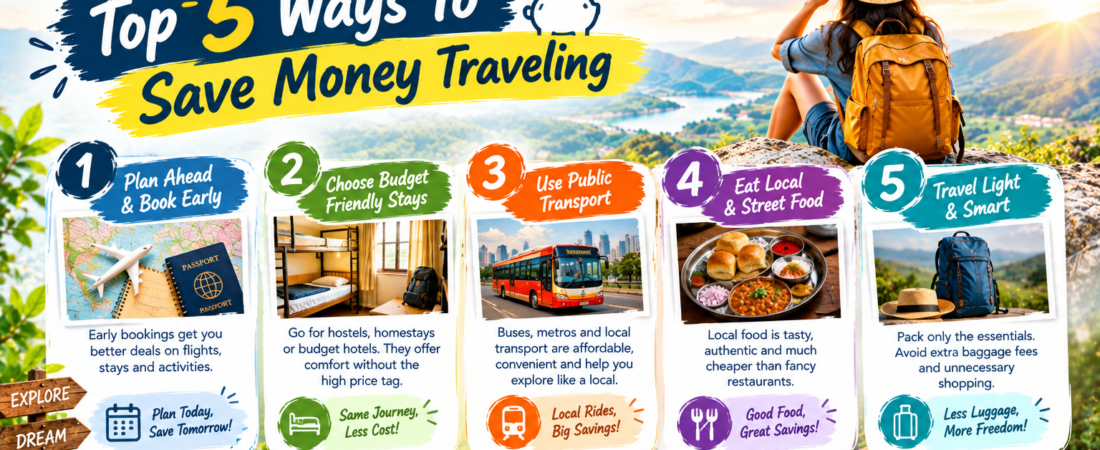
SEO Title: Top 5 Ways To Save Money Traveling
Meta Description: Learn the top 5 ways to save money traveling with practical tips for affordable flights, food, accommodation, and smarter trip planning.
Introduction
Traveling does not always have to be expensive. With thoughtful planning and a few smart habits, you can explore new destinations without putting unnecessary pressure on your budget. Saving money while traveling is not about avoiding enjoyable experiences; it is about making better choices and spending on what matters most to you.
From booking transportation early to choosing local experiences, these top 5 ways to save money traveling can help you enjoy a comfortable and memorable trip while keeping your expenses under control.
1. Book Flights and Accommodation in Advance
Early planning is one of the simplest ways to reduce travel costs. Airfares, hotels, and popular activities often become more expensive as the travel date gets closer. Start comparing options as soon as you know your destination and dates. Booking early also gives you more choices, allowing you to select accommodation that matches your budget and location preferences.
Before making a reservation, compare the total price rather than looking only at the advertised rate. Check taxes, service charges, breakfast costs, baggage fees, and cancellation policies. A slightly cheaper room far from the main attractions may cost more after transportation expenses are added, so consider both price and convenience.
2. Travel During the Off-Season
Peak travel periods usually bring higher prices and larger crowds. If your schedule is flexible, consider traveling during the shoulder season or off-season. Flights, hotels, restaurants, and tourist attractions may be more affordable when demand is lower. You may also enjoy a calmer experience with shorter queues and less crowded sightseeing locations.
Before choosing your travel dates, research the weather and local events. Off-season travel can be excellent, but you should understand what facilities or activities may be unavailable. A little research helps you balance low prices with a comfortable travel experience.
3. Use Public Transportation and Walk More
Transportation can become one of the largest parts of a travel budget. Instead of depending on taxis for every journey, learn about buses, trains, metro systems, shared rides, or local shuttle services. Many destinations offer daily or weekly travel passes that can be cheaper than paying for individual rides.
Walking is another excellent way to save money and discover a destination. If your accommodation is in a central, safe area, you may be able to walk between restaurants, markets, museums, and landmarks. Comfortable shoes, an offline map, and a basic understanding of the local transport system can help you explore more affordably.
4. Eat Like a Local
Dining at tourist-focused restaurants for every meal can quickly increase your expenses. Try local cafés, markets, family-run restaurants, and food streets instead. These places often offer authentic meals at better prices. You can also save by having a filling breakfast, carrying water, and choosing one special meal rather than eating at expensive restaurants throughout the day.
If your accommodation has a kitchen or refrigerator, prepare a few simple meals or snacks. Buying fruit, bread, yogurt, and other essentials from a local store can reduce food costs. However, do not sacrifice health and safety for a low price. Choose clean, reputable food outlets and follow local food safety advice.
5. Plan Experiences and Control Small Expenses
Many travelers spend more than expected on small purchases. Coffee stops, souvenirs, convenience-store snacks, roaming charges, and unplanned activities can gradually increase the total cost. Set a daily budget and track your spending using a notebook or phone app. Decide in advance which experiences are worth paying for and which free alternatives are available.
Look for free walking tours, public parks, viewpoints, museums with free-entry periods, cultural events, and self-guided sightseeing routes. You can also save by carrying a reusable water bottle, avoiding unnecessary shopping, and using travel insurance to reduce the financial impact of unexpected problems.
How to Create a Realistic Travel Budget
Divide your budget into transportation, accommodation, food, activities, shopping, communication, and emergencies. Add a small reserve for unexpected costs such as delays, medical needs, or changes in plans. A realistic budget should be flexible enough to handle surprises while still helping you avoid unnecessary spending.
Conclusion
Saving money while traveling is possible when you plan early, choose suitable dates, use local transportation, eat thoughtfully, and monitor daily expenses. These habits allow you to spend more on meaningful experiences instead of avoidable costs. With a practical budget and a flexible attitude, you can enjoy a rewarding journey without overspending.